
Academic integrity is the pillar of success at Dubai's universities
In a competitive and ever-evolving academic world, academic integrity is the cornerstone on which the reputation of educational institutions and the future of their students are built. In cities like Dubai, home to world-renowned universities such as Zayed University, University of Dubai, and American University of Dubai, adherence to ethical standards in research and writing is essential. The rapidly evolving global educational landscape, coupled with easy access to information online, has made the issue of plagiarism a challenge for many university students. This article, provided by the Science Club Academy, aims to highlight the importance of avoiding plagiarism and provide golden tips for university students in Dubai to ensure the originality of their academic work, focusing on best practices and available help tools.
What is Plagiarism? Definition and Types of Plagiarism
Plagiarism, or scientific plagiarism, is the act of presenting someone else's ideas, words, or works as your own without citing the original source. It is a serious violation of academic integrity that can lead to serious consequences. Plagiarism takes many forms, some of which may be intentional and others may occur unintentionally due to lack of knowledge or carelessness .
Types of plagiarism:
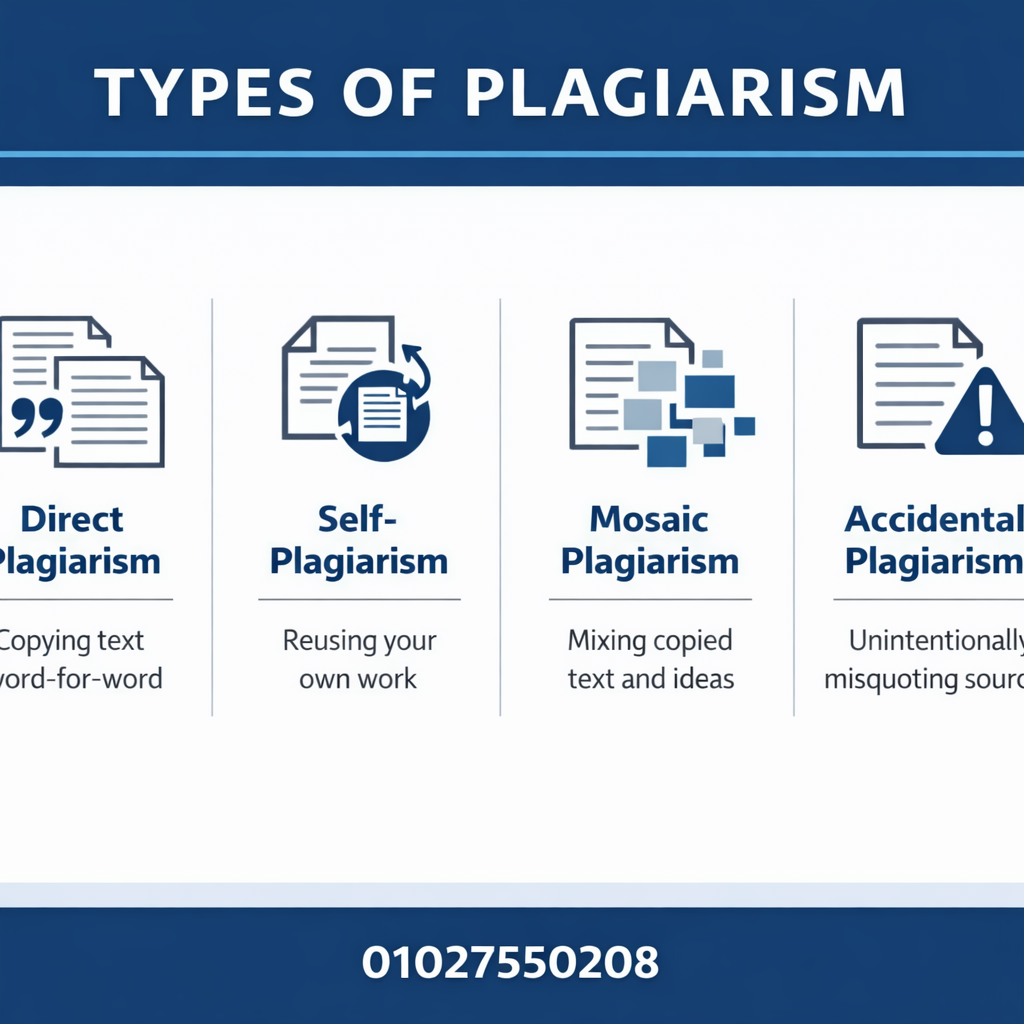
1.Direct Plagiarism: It occurs when text is copied word-for-word from another source without using quotation marks or indicating the source. This is the most obvious and serious form of plagiarism.
2.Self-Plagiarism: It occurs when a student submits work that has already been submitted in another course, or reuses large portions of their previous work without proper permission or citation. Although it may seem harmless, it is considered a violation of academic standards because it presents old work as new work.
3.Mosaic Plagiarism: Also known as patchwork plagiarism, it occurs when a student combines phrases and words from different sources without using quotation marks, or changes some words while maintaining the original structure of the sentence without referring to the source. This type is sometimes harder to detect but is still considered plagiarism.
4.Accidental Plagiarism: It occurs when a student fails to properly cite sources, forgets to add quotation marks, or misunderstands how to paraphrase. Although unintentional, it is still considered plagiarism and requires accountability.
5.Source-Based Plagiarism: This includes citing a non-existent source, referencing the wrong source, or using information from a secondary source and presenting it as if it were from the original source.
Why do students fall into the plagiarism trap?
There are many reasons why students may inadvertently fall into the trap of plagiarism. Understanding these reasons can help develop effective strategies to avoid it:
•Lack of time and academic pressure: Many students face tight schedules and high pressure to get things done, which can lead them to look for quick fixes like copying and pasting.
•Poor research and writing skills: Some students may lack the skills needed for effective research, or the ability to analyze and synthesize information in their own style, leading them to resort to excessive direct quoting or incorrect paraphrasing.
•Not understanding the rules of citation and documentation: Students may not be sufficiently familiar with academic standards and various documentation rules (such as APA and MLA), leading to unintentional errors in referencing sources.
•The misconception that changing a few words is enough: Some students think that changing a few words in the original sentence makes it their own work, a misconception that leads to mosaic plagiarism.
•Easy access to information: With so much information available online, it has become very easy to copy texts, increasing the temptation for plagiarism.
•Fear of failure: Some students may resort to plagiarism out of fear of not being able to meet the professor's expectations or get a good grade.
The Risks and Consequences of Plagiarism in UAE Universities
UAE universities, like their global counterparts, take plagiarism very seriously. The consequences can be severe and significantly affect a student's academic and professional career:
•Failing a course or assignment: The first penalty is often a failing grade in the assignment in which the plagiarism occurred, or even in the entire course.
•Suspension or expulsion from the university: In more serious cases or repeated offenses, a student can be suspended for a specific period of time or permanently expelled from the university.
•Defamation of academic reputation: Cases of plagiarism are recorded on a student's academic record, which may affect opportunities for admission to graduate programs or scholarships.
•Loss of confidence: Students lose the trust of their professors and colleagues, which affects their learning experience and academic environment.
•Professional consequences: The effects of plagiarism may extend beyond graduation, as it can affect job prospects, especially in fields that require intellectual and research integrity.
•Legal consequences: In some cases, there may be legal consequences, especially if the stolen work is copyrighted.
Golden tips to avoid plagiarism
To avoid falling into the trap of plagiarism, college students should adopt a set of sound academic practices. The Science Club Academy offers these golden tips to help you maintain your academic integrity:
1.Start your research early: Starting early gives you enough time to research, read, understand, and write without pressure, minimizing the temptation to copy on the fly.
2.Understand the task well: Make sure you fully understand the requirements of the assignment, including how to use resources and whether group work is allowed.
3.Prompt and accurate documentation: Once you find a piece of information or an idea you want to use, document the source immediately. Record the author's name, title of the work, date of publication, and page number if available. Use an organized system to keep track of your sources.
4.Paraphrasing skills:
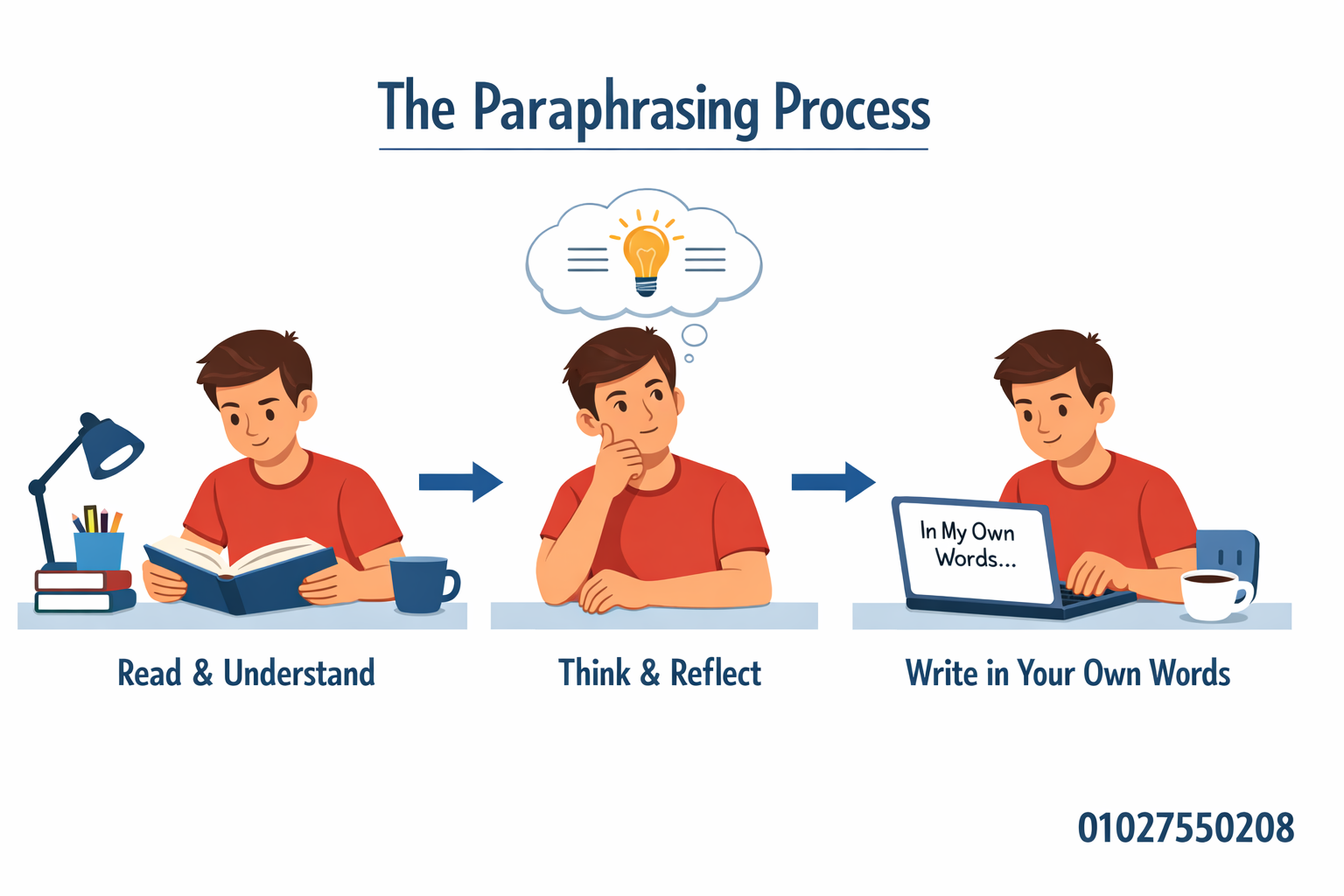
Paraphrasing is the ability to express someone else's ideas in your own words while maintaining the original meaning. This is a crucial skill to avoid plagiarism. Read the original text, set it aside, and then write the idea in your own style. Compare what you've written with the original to make sure you haven't copied the original sentences or structure.
1.Use direct quotes with caution: Use direct quotes only when the original text is essential (such as a precise definition, or a strong statement). Direct quotes should be short, enclosed in quotation marks, and followed by an accurate reference to the source.
2.Summarizing: Summarizing is presenting the main ideas of a long source in your own words, while maintaining the overall meaning. The summarization should be much shorter than the original text and the source should be referenced.
3.Develop your own academic voice: The more you practice writing and researching, the more you will develop your own style and voice. This will make it easier for you to express complex ideas in your own words.
4.Use reference management tools: Programs like Zotero, Mendeley, and EndNote can help you organize your sources and automatically generate a reference list according to your desired documentation style.
5.Review the work carefully: Before submitting any work, review it thoroughly to make sure all sources are properly documented and that you haven't accidentally copied any text.
6.Utilize proofreading and academic services: If you are unsure about the quality of your work or documentation, do not hesitate to seek help from the proofreading or academic services available at your university or through the Science Club Academy.
International documentation guides (APA, MLA, Chicago): Simplified explanation
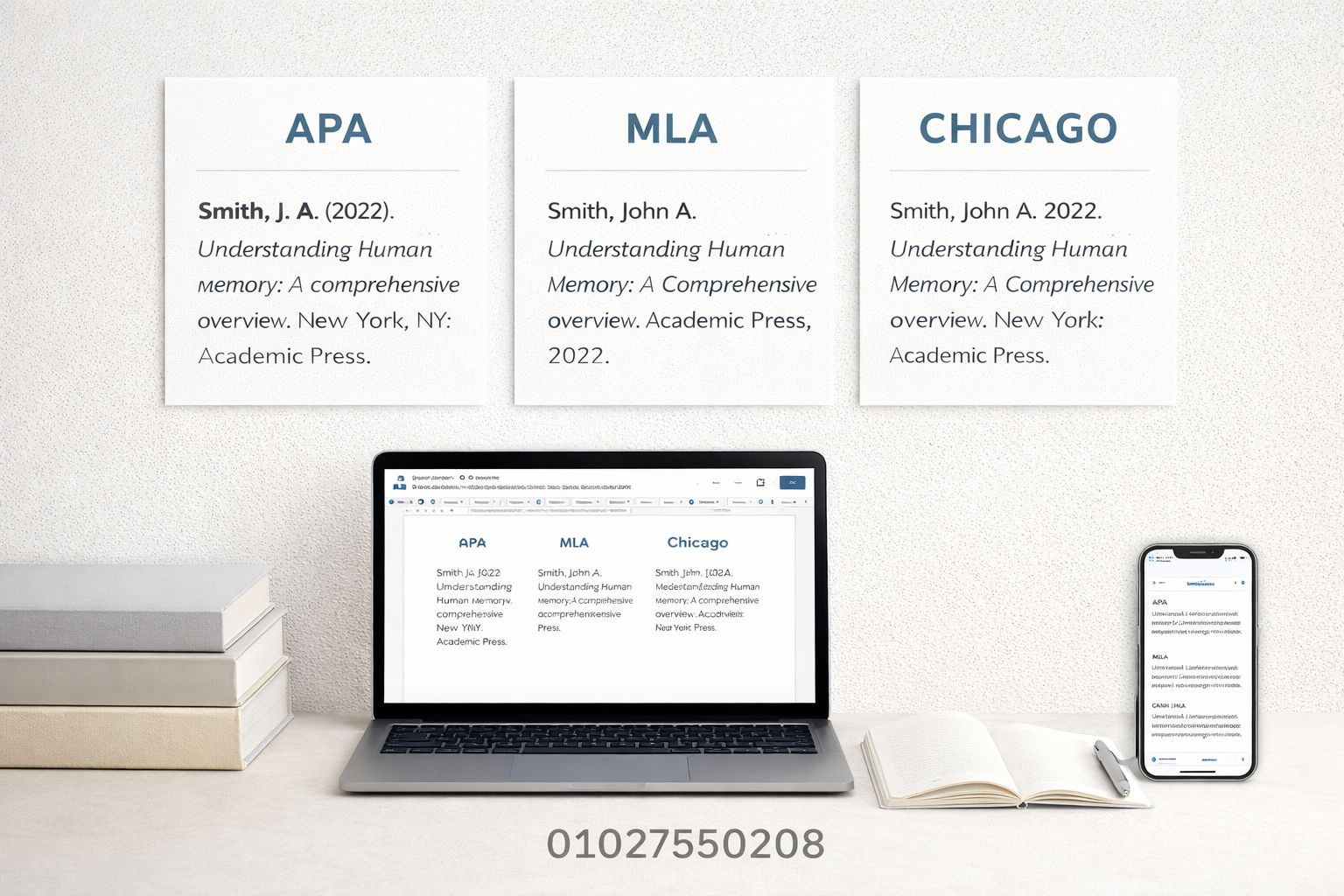
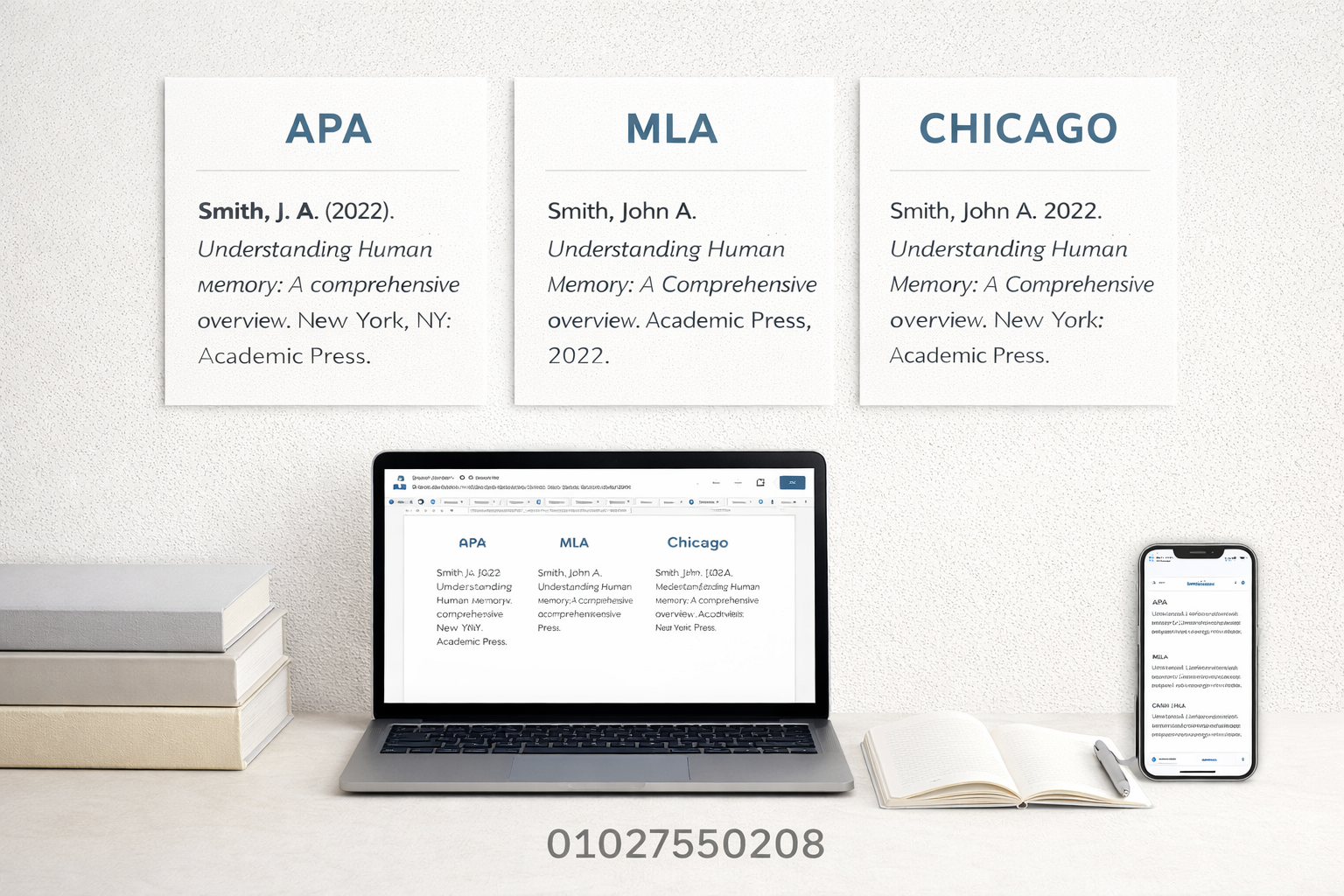
Documentation systems serve as a standardized language for academic communication, ensuring that the efforts of others are recognized and making it easier for readers to track down sources. Here's a simple explanation of the most common documentation systems:
1. APA (American Psychological Association) style
•Spheres: It is mainly used in social sciences, education, and psychology.
•Focus: It focuses on the date of publication, as the freshness of the information is critical in these fields.
•In-text documentation: (author name, year of publication) or (author name, year of publication, page number) for direct citation.
•List of references: Include at the end of the work under the heading “References”.
2. MLA (Modern Language Association) style
•Spheres: It is mainly used in the humanities, such as literature, language, and philosophy.
•Focus: Emphasizes the author's name and page number, as locating the information in the original text is important.
•In-text documentation: (Author's name and page number).
•List of references: It is listed at the end of the work as “Works Cited”.
3. Chicago style (Chicago Manual of Style)
•Spheres: It is widely used in history, the arts, and some social sciences.
•Focus: It provides two main systems: Notes-Bibliography System and Author-Date System. The first is common in the humanities, the second in the social sciences.
•In-text documentation: It relies on footnotes or endnotes in the Notes and Bibliography system, or (author name and publication year) in the Author-Date system.
•List of references: It is listed at the end of the work under the heading “Bibliography” or “References” depending on the system used.
Students should always check the style of documentation required by the course professor or university, as adherence to the correct style is an integral part of academic integrity.
Best Plagiarism Detection Tools in 2026
With the development of technology, plagiarism detection tools have become more sophisticated and accurate. Universities and academic institutions use these tools to maintain standards of academic integrity. Here are some of the most prominent tools that students should know about in 2026:
1.Turnitin: Turnitin is the gold standard in plagiarism detection in academia. It is used by thousands of universities around the world, including many in Dubai and the UAE. It compares submitted texts against a huge database of billions of web pages, academic articles, books, and previous student work. It provides a detailed similarity report that identifies identical parts and points to the original sources. It also provides tools to help students improve their writing and documentation skills.
2.iThenticate: iThenticate is often used by researchers and publishers to ensure the authenticity of research papers and scholarly articles before publication. It is characterized by its high accuracy and extensive database focused on academic and professional content.
3.Grammarly (Premium Version): In addition to being a powerful grammar checker, the paid version of Grammarly offers a powerful plagiarism detection tool. It compares the submitted text to billions of web pages and academic databases, and provides a report that identifies possible similarities.
4.Smodin: Smodin offers a comprehensive set of tools that go beyond just plagiarism detection, including an AI writer, a paraphrasing tool, and a summarization tool. Its plagiarism checker is effective at identifying copied content.
5.Quetext: Quetext provides a plagiarism checker that features an easy-to-use interface and DeepSearch technology that helps detect contextual similarities and not just literal matching. It is available in a limited free version and a paid version with full features.
It is important for students to remember that these tools are only aids. The goal is not only to avoid detection, but to understand the principles of academic integrity and apply them in all their work.
The role of the Science Club Academy in supporting students
The Scientific Club Academy recognizes the challenges that university students face in their academic journey, especially with regard to academic integrity and avoiding plagiarism. Therefore, the academy offers a range of services and training courses specifically designed to empower students and equip them with the skills needed to produce original and high-quality work:
•Workshops on academic integrity: Organize interactive workshops to explain the concept of plagiarism, its types, consequences, and how to effectively avoid it.
•Training in academic research and writing skills: Specialized courses on how to conduct scientific research, analyze sources, paraphrase, summarize, and develop the student's writing style.
•Explain and apply documentation systems: Detailed explanations and practical exercises on the use of different documentation systems such as APA, MLA, and Chicago, with practical examples.
•Proofreading services: Providing a comprehensive proofreading service for academic works to ensure that they are free of grammatical and linguistic errors, and verify the correctness of documentation and referencing.
•Individual consultations: Provide one-on-one counseling for students who are having difficulties understanding the requirements of assignments or how to handle sources.
•Help with the use of plagiarism detection tools: Guide students on how to use plagiarism detection tools to check their work before submission, and understand the resulting reports.
The Scientific Club Academy is committed to supporting students in Dubai and the UAE to achieve academic and professional excellence, by instilling values of integrity and authenticity at every step of their educational journey.
Conclusion: Toward a plagiarism-free academic future
A commitment to academic integrity is more than just complying with university rules; it is a reflection of personal and professional values that will accompany a student throughout his or her life. In a thriving academic environment like Dubai, where educational opportunities are endless, every student has a responsibility to maintain the originality of their intellectual work. By understanding what plagiarism is, avoiding its causes, adhering to the golden tips provided, and utilizing the support offered by the Science Club Academy, university students can build a bright academic future based on merit and innovation. Always remember that true knowledge lies in deep understanding, critical analysis, and the ability to formulate ideas in your own style, while recognizing the efforts of others. Let's work together to create a learning environment that values originality and excellence.
For communication and inquiries:
Science Club Academy | 01027550208



No comment