

Cybersecurity has become an essential element in the era of digital transformation, as governments, institutions and individuals rely on digital systems in various aspects of life, which increases the importance of protecting data and networks from cyber attacks, and in light of the Gulf countries, especially Saudi Arabia and the UAE, towards building advanced digital economies within ambitious visions such as 2030 and 2071, cybersecurity is no longer just a technical option but a pillar to achieve development, ensure the continuity of services and protect national security, and with increasing cyber risks, the need to prepare specialized cadres capable of facing these challenges emerges, which the Scientific Club Academy seeks from.
Cybersecurity between digital ambitions and rising challenges
The Kingdom of Saudi Arabia and the United Arab Emirates are global leaders in adopting modern technologies and digital transformation, and this trend is directly reflected in their keen interest in cybersecurity, which has become an integral part of their national strategies.
Saudi Arabia: Global leadership in cybersecurity as part of Vision 2030
Saudi Arabia will top the global cybersecurity index in 2025, a feat that reflects the government's relentless efforts
Saudi Arabia to bolster its cyber defenses. This leadership comes in the context of Saudi Vision 2030, which aims to diversify the economy and reduce dependence on oil.
Building a prosperous digital society requires strong protection of critical digital infrastructure, including the energy, finance, and transportation sectors
health, and communications.
Saudi Arabia to bolster its cyber defenses. This leadership comes in the context of Saudi Vision 2030, which aims to diversify the economy and reduce dependence on oil.
Building a prosperous digital society requires strong protection of critical digital infrastructure, including the energy, finance, and transportation sectors
health, and communications.
The cybersecurity market in Saudi Arabia has experienced tremendous growth, estimated to be around $3.5 to $4 billion in 2024 and 2025, respectively. This growth is driven by huge government investments in digital technologies, growing awareness of cyber threats, and the urgent need to protect the sensitive data of citizens and institutions. The National Cybersecurity Authority (NCA) was established in the Kingdom to be the entity responsible for regulating and developing the cybersecurity sector, setting national policies and standards, and building specialized human capacities.
It includes the main challenges facing Saudi Arabia in this area:
- Increasingly sophisticated attacks: As digitization increases, so do hacking attempts by diverse actors, including organized criminal groups, state-sponsored actors, and individual hackers.
- In addition to Lack of competencies: Despite efforts, there is still a gap in the number of qualified cybersecurity professionals.
This requires greater investment in education and training.
- as well as Protecting critical infrastructure: Protecting critical systems that support essential services to society requires multi-layered defense strategies and continuous monitoring.
- Internal threats: Projections for 2026 indicate that the focus will shift from external attacks to internal threats.
This calls for strengthening internal security mechanisms and employee security awareness =”text”>.
UAE: A regional center for innovation and cybersecurity
The UAE is a regional hub for technological innovation, making it an attractive target for cyberattacks.
But it also pushes them to continuously develop advanced defense solutions.
But it also pushes them to continuously develop advanced defense solutions.
One of the main challenges facing the UAE:
- Threats to critical sectors: The oil and gas, financial, and aviation sectors are prime targets for cyberattacks.
- Also The rapid shift towards cloud computing and artificial intelligence: This transformation requires new security strategies that are suited to cloud environments and emerging technologies.
- With the increasing use of digital services, the protection of users' personal data is critical and requires strict privacy laws.
Shared Challenges and Future Directions (2026)
Saudi Arabia and the UAE share many of the same challenges and trends in cybersecurity.
Targeting critical infrastructure, increasing reliance on artificial intelligence and the Internet of Things (IoT), opening up new security vulnerabilities.
The year 2026 is expected to see shifts in the nature of threats, with a focus on:
Targeting critical infrastructure, increasing reliance on artificial intelligence and the Internet of Things (IoT), opening up new security vulnerabilities.
The year 2026 is expected to see shifts in the nature of threats, with a focus on:
- Agentic AI: The use of artificial intelligence in cyberattacks, requiring the development of AI-based defenses .
- Attacks on supply chains: Targeting vulnerabilities in digital supply chains to gain access to targeted systems.
- as well as Cloud security: As the adoption of cloud services increases, securing these environments becomes a top priority.
- Also Security awareness: Enhancing the security awareness of employees and personnel remains the first line of defense against many attacks.
Responding to these challenges requires continuous investment in new technologies, developing human competencies, and strengthening regional and international cooperation
In the field of exchanging security information and expertise.
In the field of exchanging security information and expertise.
Careers in Cybersecurity
Cybersecurity is one of the fastest growing fields in the world, and as digital threats increase, so does the demand for specialized talent
In Saudi Arabia and the UAE, where the pace of digital transformation is accelerating, building a career
Cybersecurity is a strategic choice for many ambitious young people.
In Saudi Arabia and the UAE, where the pace of digital transformation is accelerating, building a career
Cybersecurity is a strategic choice for many ambitious young people.
The Growing Demand for Cybersecurity Experts
Global statistics indicate that there is a significant gap between the supply and demand for cybersecurity professionals.
In the MENA region, where businesses and government organizations need thousands of experts to meet their growing security needs.
In Saudi Arabia and the UAE, this demand translates into promising career opportunities, competitive salaries, and diverse and rewarding career paths.
In the MENA region, where businesses and government organizations need thousands of experts to meet their growing security needs.
In Saudi Arabia and the UAE, this demand translates into promising career opportunities, competitive salaries, and diverse and rewarding career paths.
Studies expect this growth in demand to continue for years to come, driven by factors such as:
- Expanding digital infrastructure: As investment in smart cities, the Internet of Things, and artificial intelligence continues.
Potential vulnerabilities that need to be protected are increasing.
- As The evolution of cyber threats: The methods of cyberattacks are constantly evolving, requiring experts who are able to keep up with these developments
and develop innovative defense solutions.
- as well as Regulatory compliance: Governments and regulators impose strict data protection and privacy standards.
This prompts companies to hire specialists to ensure compliance.
- Bonus Investing in cybersecurity: Governments and businesses are allocating huge budgets for cybersecurity.
This creates new job opportunities in the sector.
Diverse career paths in cybersecurity
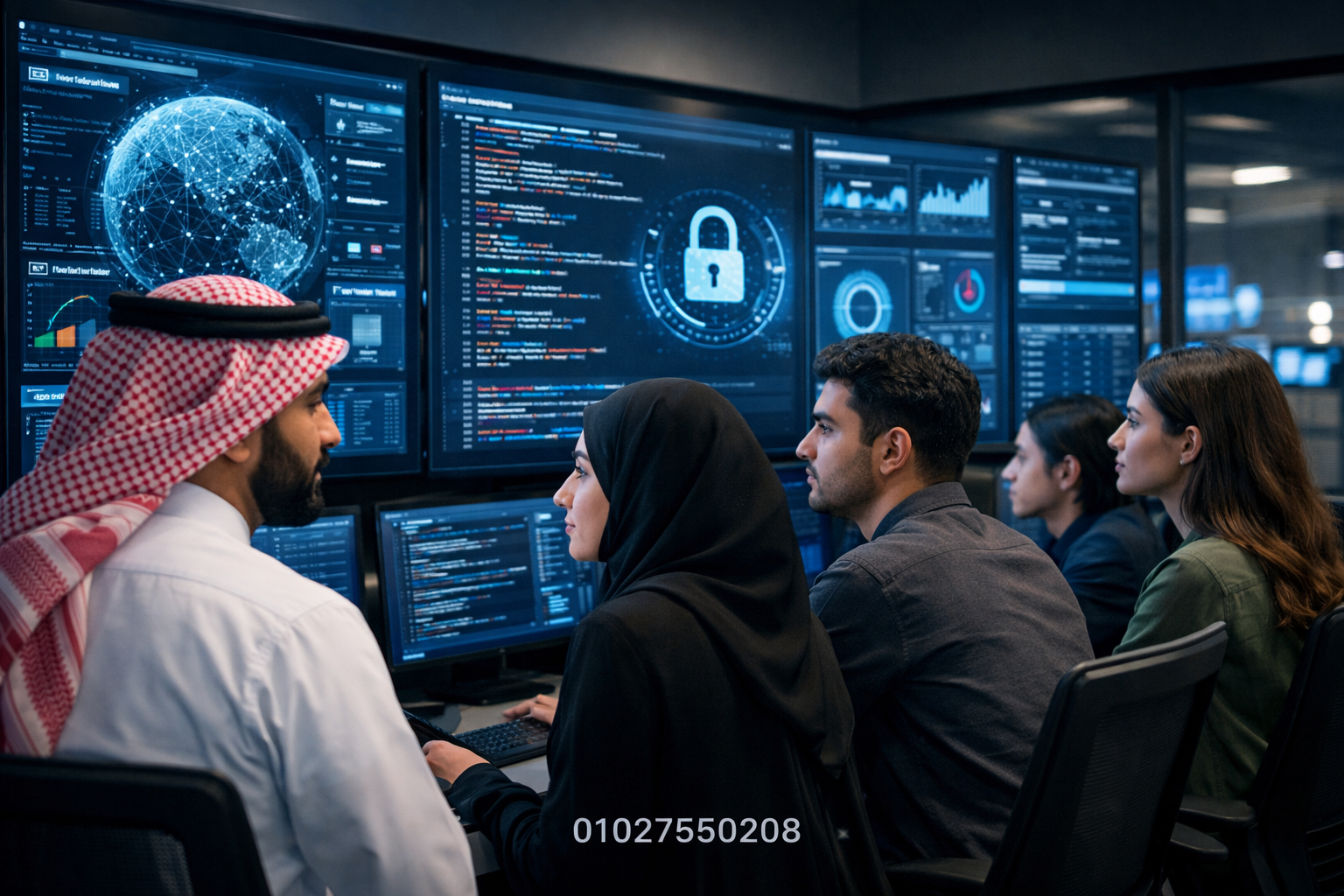
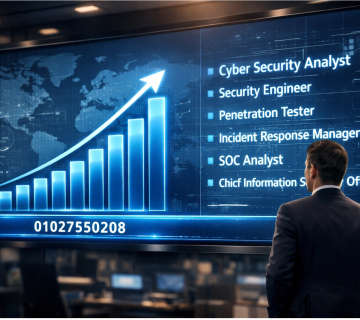
The field of cybersecurity offers a wide range of specialized career paths, suited to different skills and interests.
One of the most prominent of these paths:
One of the most prominent of these paths:
Key skills for success in cybersecurity
To succeed in this field, aspirants need to develop a range of technical and non-technical skills, including technical skills:
- Understanding networks and operating systems: Deep knowledge of how networks (TCP/IP, DNS, etc.) and operating systems (Windows, Linux) work.
- as well as Programming: Proficiency in programming languages such as Python, Java, or C++, which are used to develop security tools and analyze malware.
و Application and web security: Understand common web application vulnerabilities (OWASP Top 10) and how to protect them.
Also encryption: Cryptographic principles and algorithms used to protect data.
as well as Digital forensics and incident response: The ability to analyze, identify and respond effectively to attacks.
Also, cloud security: Secure cloud environments (AWS, Azure, Google Cloud).
Non-technical skills are equally important and include:
- Critical thinking and problem solving: Ability to analyze complex issues and develop innovative solutions.
- as well as Continuous learning: The field of cybersecurity is rapidly evolving, requiring continuous learning and keeping up with the latest threats and technologies.
- In addition For effective communication: Ability to explain complex technical concepts to non-specialists and present reports clearly.
- Also Teamwork: Collaborate with other teams inside and outside the organization.
- Professional ethics: Adhere to the highest standards of ethics and integrity in handling sensitive information.
International certifications are the key to professional excellence
International cybersecurity certifications serve as a passport to professional excellence, demonstrating to organizations that the holder possesses the knowledge
and the skills needed to perform specific tasks are among the most prominent certifications:
and the skills needed to perform specific tasks are among the most prominent certifications:
- CompTIA Security+: A basic certificate that covers basic security concepts.
- Certified Ethical Hacker (CEH): It focuses on ethical penetration testing and vulnerability assessment.
- Certified Information Systems Security Professional (CISSP): Advanced certification for experienced information security management professionals.
- Certified Information Security Manager (CISM): It focuses on managing information security programs.
- Offensive Security Certified Professional (OSCP): Practical certification focused on penetration testing.
Obtaining these certifications, coupled with work experience, greatly enhances employment opportunities and career advancement in the field of cybersecurity.
It opens doors to global opportunities.
It opens doors to global opportunities.

Science Club Academy is your partner in building a secure cyber future
With the growing demand for cybersecurity talent, specialized educational and training institutions are becoming increasingly important
Science Club Academy is one such organization that seeks to bridge this gap.
which offers integrated training programs to qualify individuals to enter this vital field and contribute to building a secure digital future.
Science Club Academy is one such organization that seeks to bridge this gap.
which offers integrated training programs to qualify individuals to enter this vital field and contribute to building a secure digital future.
The vision of the Scientific Club Academy and its role in empowering competencies
The Scientific Club Academy believes that practical, market-oriented education is the key to empowering the next generation of cybersecurity experts.
The academy focuses on providing specialized training courses that combine simple theoretical explanations with intensive practical application, ensuring that
Students are equipped with the skills needed to face real challenges in the work environment. The Academy's vision is to be the partner of choice for individuals and organizations
in developing cyber capabilities, by:
The academy focuses on providing specialized training courses that combine simple theoretical explanations with intensive practical application, ensuring that
Students are equipped with the skills needed to face real challenges in the work environment. The Academy's vision is to be the partner of choice for individuals and organizations
in developing cyber capabilities, by:
- there Practical training methodologies: The academy relies on real-life labs and experiments, where students are trained on cybersecurity tools and techniques used in the industry. This hands-on approach ensures that graduates are ready to enter the job market immediately.
- as well as Preparing for international certifications:> The Academy's programs are designed to qualify students for international certifications, such as CompTIA Security+, CEH, etc. These certifications increase the credibility of graduates and enhance their career opportunities both locally and globally.
- Also Keep up with the latest developments: The academy team is constantly updating the curriculum to keep up with the latest threats and technologies in cybersecurity, including artificial intelligence, cloud security, and big data analytics.
- as well as Supporting scientific publishing and skills development: In addition to cybersecurity courses, the academy offers other academic and educational services.
Such as research, language and technical training, support for scientific publication, and development of learning skills, providing a holistic learning environment.
Scientific Club Academy Programs in Cybersecurity
The Scientific Club Academy offers a range of courses and training programs designed to meet the needs of different levels, from beginners to professionals.
These programs include:
These programs include:
- there Cybersecurity fundamentals course: It covers the basic concepts of cybersecurity, types of threats, and
and best practices for protecting systems and data, suitable for beginners and those wanting to understand the field.
- as well as Ethical Hacking: It focuses on learning ethical penetration testing techniques, how to detect
Security vulnerabilities and fix them before attackers can exploit them.
- Also Digital Forensics and Incident Response course: Learn how to investigate security incidents and collect digital evidence.
and restore affected systems.
- Network security: Covers securing network infrastructure, including firewalls, intrusion detection systems, and virtualized networks
(VPN).
- there Cloud security course: It focuses on securing data and applications in cloud environments, and understanding common security models in cloud services.
- The Academy's programs are also flexible, with online options available to suit working individuals or those who prefer to learn from anywhere.
Ongoing support is also provided to students to ensure they get the most out of the courses.
Why choose the Science Club Academy?
- Expert trainers: Our instructors have extensive practical experience in the field of cybersecurity and are keen to impart this expertise to students.
- Also Modern and comprehensive curricula: The curriculum is regularly updated to include the latest technologies and threats.
- as well as A supportive learning environment: The academy provides a learning environment that encourages interaction and collaboration among students.
- In addition to Career opportunities: The academy helps graduates build their resumes and directs them towards career opportunities in the labor market.
By joining the Science Club Academy, individuals can not only gain the skills needed to protect data, but they can also gain the skills needed to protect data.
But also building a promising career in one of the most in-demand and dynamic fields in the digital age.
But also building a promising career in one of the most in-demand and dynamic fields in the digital age.
Contact number: 01027550208
Protecting your data and your future Practical tips and advanced strategies
Cybersecurity is not just for experts and specialists, it is a shared responsibility of every individual and organization.
With increasing reliance on technology, understanding the fundamentals of cybersecurity and implementing best practices is vital to protecting personal and professional data.
and ensuring a secure future in the digital space.
With increasing reliance on technology, understanding the fundamentals of cybersecurity and implementing best practices is vital to protecting personal and professional data.
and ensuring a secure future in the digital space.
Practical tips to protect your personal data
- There use strong and unique passwords: Avoid using passwords that are easy to guess, and use a combination of capital letters
Use a password manager to generate and store passwords securely.
- as well as Enable multi-factor authentication (MFA): This extra layer of security adds strong protection to your accounts.
They require you to provide two or more forms of verification (such as a password and a code sent to your phone).
- Be wary of phishing messages: Do not click on suspicious links or open attachments from unknown sources.
Always verify the identity of the sender before taking any action.
- In addition to regularly updating programs:Make sure your operating system, browsers, antivirus software, and all other applications are updated regularly, as updates often include security fixes for discovered vulnerabilities.
- as well as Data backup: Make regular backups of your important data to external storage media or secure cloud services.
to ensure that they can be recovered if they are lost or damaged.
- there Use a virtual private network (VPN): When connecting to public Wi-Fi networks, use a VPN to encrypt your connection and protect your data from spying.
- Keep an eye on your bank and financial accounts: Regularly check your bank and credit card statements for suspicious activity.
- Be conscious of what you share online: Think twice before posting sensitive personal information on social media or public forums.
Advanced strategies to protect organizations
For organizations, protecting data and digital assets requires more complex and integrated strategies:
- Implementing a cybersecurity framework: such as the NIST or ISO 27001 framework, to identify risks, implement security controls, and monitor performance.
- Also Vulnerability Management: Conduct regular scans and penetration testing to identify vulnerabilities and fix them before they are exploited.
- Intrusion detection and prevention systems (IDS/IPS): Monitor network traffic to detect suspicious activity and prevent attacks.
- As Security Information and Event Management (SIEM): Collect and analyze security event logs from multiple sources to detect and respond to threats.
- Also Security training and awareness for employees: Employees are the first line of defense, so they should be regularly trained on security best practices
and how to recognize attacks.
- as well as Incident response and disaster recovery plans: Develop clear plans for handling security incidents and recovering systems and data after an attack.
- Supply chain security: Assess the security risks associated with external vendors and suppliers.
- Investing in AI and machine learning for security: Use these technologies to improve threat detection capabilities
and respond to them automatically.
The role of continuing education in Building a secure career
Protecting a career in cybersecurity requires a commitment to continuing education and professional development.
Threats are evolving, so cybersecurity experts must keep up with these changes by:
Threats are evolving, so cybersecurity experts must keep up with these changes by:
- Specialized training courses: Engage in advanced training courses in areas such as cloud security, or artificial intelligence for security.
or operational security (OT Security).
- as well as Professional certificates: Seek new international certifications to enhance expertise and credibility.
- Conferences and seminars: Attend industry events to exchange knowledge and learn about the latest trends and technologies.
- In addition For professional networks: Build relationships with other experts in the field to share experiences and collaborate.
- Also Search and read: Follow the latest research and articles in the field of cybersecurity to stay up-to-date.
Investing in continuing education not only enhances individual capabilities, but also contributes to building a stronger and more resilient cyber community.
Able to protect digital assets and the economic future of nations.
Able to protect digital assets and the economic future of nations.
Contact number: 01027550208
An in-depth analysis of modern cyber threats and how to address them
In this chapter, we dive deeper into the types of cyber threats faced by organizations and individuals in Saudi Arabia and the UAE.
With advanced defense strategies for each type, understanding the enemy is the first step in building impenetrable defenses:
With advanced defense strategies for each type, understanding the enemy is the first step in building impenetrable defenses:
Advanced Spear Phishing attacks
Phishing attacks are no longer limited to spam emails, but are now targeting specific individuals
(such as executives or finance staff) using carefully collected information from social media.
(such as executives or finance staff) using carefully collected information from social media.
• How to counteract? Using user behavior analysis (UEBA) techniques and training employees to simulate phishing attacks.
Strict identity verification policies are in place before any money transfers are made.
Strict identity verification policies are in place before any money transfers are made.
Ransomware is becoming sold as a service, making it easier for amateur attackers to launch devastating attacks in Saudi Arabia.
These attacks have targeted vital sectors such as health and manufacturing.
These attacks have targeted vital sectors such as health and manufacturing.
• How to counteract? With the “3-2-1” backup strategy (3 copies, on two different media, one of which is offsite).
Endpoint Detection and Response (EDR) and Network Segmentation are used to prevent the spread of the malware.
Endpoint Detection and Response (EDR) and Network Segmentation are used to prevent the spread of the malware.
Distributed Denial of Service (DDoS) attacks
These attacks also aim to flood websites and digital services with fake traffic to take them out of service. With Saudi Arabia and the UAE moving towards providing all government services electronically, these attacks become very dangerous.
• How to counteract? Using cloud-based DDoS protection services, flexibly scale infrastructure, and monitor network traffic in real-time to detect abnormal patterns.
4. Zero-Day Exploits
These are the vulnerabilities that software developers don't know about yet, and attackers exploit them before a patch is available.
•leaf=”true”>How to respond? Implement Defense in Depth, use behavior-based intrusion detection systems instead of just signatures, and participate in Bug Bounty programs.
The role of artificial intelligence in the future of cybersecurity
AI is a double-edged sword in cybersecurity, as attackers use it to develop smarter and more automated attacks.
Defenders use it to enhance their detection and response capabilities.
Defenders use it to enhance their detection and response capabilities.
Artificial Intelligence as a Defense Tool
- Automatic threat detection: AI can analyze billions of security events in seconds to detect patterns
that may be missed by human analysts.
- as well as Automated incident response: AI-powered systems can isolate infected devices or close compromised ports
automatically as soon as an attack is detected.
- Also Prediction of attacks: By analyzing historical data, AI can predict potential targets for upcoming attacks.
Artificial Intelligence as an offensive tool
- there Generate variable malware: AI can rewrite malware code to avoid detection by
Traditional antivirus programs.
- So are deepfakes: Using artificial intelligence to create fake videos or audio recordings to deceive employees
and obtaining sensitive information.
- Also Automate brute force attacks: Use artificial intelligence to guess passwords faster and smarter.
Cybersecurity legislation and regulations in the region
Saudi Arabia and the UAE also recognize that technology alone is not enough, it must be supported by a strong legal framework:
In Saudi Arabia
- as well as Anti-Cybercrime Law: Defines penalties for various types of cybercrimes.
- As there are Policies of the National Cybersecurity Authority: Strict security standards are imposed on government and private entities.
- Also Personal Data Protection Law: It aims to protect the privacy of individuals and regulate how their data is collected and processed.
in the United Arab Emirates
- there The Anti-Rumor and Cybercrime Law: Provides a comprehensive legal framework to combat cybercrime.
- as well as UAE Cybersecurity Strategy: It aims to create a safe and resilient cyber environment in the country.
- there Federal Personal Data Protection Act: Aligns with global standards such as GDPR to protect data privacy.
A roadmap for cybersecurity beginners
If you want to start your career in this field, here are practical steps:
1. Build the basics: Start by learning the basics of networking (Network+) and operating systems (Linux).
2. as well as Have a basic certification: such as CompTIA Security+ to understand general security concepts.
3. Specialty: Pick a niche (such as penetration testing or cloud security) and start diving in.
4. In addition For practical application: Use platforms like TryHackMe or Hack The Box to practice your skills in a safe environment.
5. Build a Portfolio: Participate in CTF (Capture The Flag) competitions and document your projects on GitHub.
6. and professional networking: Join cybersecurity communities on LinkedIn and follow experts in the field.
7. Enroll in a specialized academy: such as the Science Club Academy for hands-on training and expert guidance (contact number: 01027550208).
Adhering to these steps, with patience and perseverance, will open your horizons in one of the most exciting and important fields of our time.
Cybersecurity and Digital Transformation in the Financial Sector (FinTech)
The financial sector in Saudi Arabia and the UAE is one of the most targeted and evolving sectors, with the emergence of digital banks and e-payment applications.
Cybersecurity has become the backbone of financial trust:
Cybersecurity has become the backbone of financial trust:
Fintech Security Challenges
- As there are Real-time transaction protection: Pay-as-you-go systems require defenses capable of detecting fraud in milliseconds.
- > Further Application Programming Interfaces (APIs) security: Fintech relies heavily on APIs to connect different services.
This creates potential entry points for attackers.
- Compliance with PCI DSS standards: Companies that handle credit card data must adhere to very strict security standards.
Security Innovations in the Financial Sector
- Blockchain: Utilize distributed ledger technology to enhance the transparency and security of financial transactions.
- as well as Biometrics: Use your face and fingerprint as a more secure alternative to traditional passwords.
- In addition to Behavioral analysis of fraud: Use artificial intelligence to distinguish normal spending patterns from fraudulent attempts.
Successfully securing the financial sector not only protects money, but also the macroeconomic stability of countries, which is what Vision 2030 prioritizes. For a professional consultation or to join our training programs, contact the Science Club Academy at 01027550208
e-leaf=”true”>Cybersecurity in Saudi Arabia, the UAE, and around the world has become not just a technical challenge, but a strategic necessity that touches all aspects of life.
From protecting individuals' personal data to securing countries' critical infrastructure, cybersecurity plays a pivotal role in ensuring continued economic growth, fostering digital trust, and protecting national security.
From protecting individuals' personal data to securing countries' critical infrastructure, cybersecurity plays a pivotal role in ensuring continued economic growth, fostering digital trust, and protecting national security.
Both Saudi Arabia and the United Arab Emirates have shownAs digital transformation continues at an accelerated pace and cyber threats continue to grow in complexity, the UAE is firmly committed to strengthening its cyber capabilities by investing in new technologies, developing organizational frameworks, and building human competencies.
Qualified cybersecurity experts who are able to effectively address these challenges will continue to be in high demand.
Qualified cybersecurity experts who are able to effectively address these challenges will continue to be in high demand.
It is also Science Club Academy is a strategic partner in this journey, offering integrated and practical training programs.
Designed to prepare individuals to enter this dynamic field. Through modern training methodologies, emphasis on practical application, and preparation for international certifications.
The academy enables its students to build a secure and prosperous career in the world of cybersecurity.
Designed to prepare individuals to enter this dynamic field. Through modern training methodologies, emphasis on practical application, and preparation for international certifications.
The academy enables its students to build a secure and prosperous career in the world of cybersecurity.
Contact number: 01027550208





No comment