


Introduction: The Journey to Academic Excellence in Graduate Studies
A master's thesis is the culmination of postgraduate studies. It is not just a passing academic research, but a living testimony to the researcher's ability to think critically, analyze deeply, and make an original contribution to his or her field of specialization. In Saudi Arabia and the UAE, universities and academic institutions pay great attention to the quality of master's theses and set strict standards to ensure their excellence and global acceptance. This comprehensive guide from Science Club Academy To provide graduate students with the knowledge and tools needed to write a successful and acceptable master's thesis, with a careful focus on the specific requirements and standards of universities in Saudi Arabia and the UAE.
The road to a master's degree is fraught with challenges, but it's also full of opportunities for self-discovery and skill development. Whether you are at the beginning or advanced stages of your research journey, understanding the rules of science is the key to overcoming obstacles and achieving great success. We are here to be your partners in this journey, providing you with the expertise and support you need to reach your goal with the highest quality. This article will delve into every aspect of writing a master's thesis, from topic selection to the final defense, providing practical tips and effective strategies to ensure academic excellence.
The importance of a master's thesis in your academic and professional career
The importance of a master's thesis goes beyond just getting a degree to add to your resume; it is a golden opportunity for the researcher to develop his research skills, enhance his analytical abilities, and prove his competence in a specific field.
Academic and research impact: Building the Scientific Future
Academically, a master's thesis opens doors to advanced postgraduate studies such as a PhD, and contributes to building a researcher's scientific reputation by publishing in high-impact peer-reviewed journals. It is the first building block in building the personality of an independent researcher who can criticize ideas and provide solid and innovative scientific alternatives. It also gives the researcher the ability to gain a deeper understanding of the discipline and develop the critical and analytical thinking skills that are indispensable in any future academic or research path. Contributing to human knowledge through original research is the essence of graduate studies, and the master's thesis is the first step in this contribution.
Professional value in the labor market: Enhancing competitiveness
Professionally, a master's degree enhances the chances of obtaining prestigious jobs in the public and private sectors and gives the holder a competitive advantage in the labor market, especially in fields that require strategic thinking and scientific research such as management, engineering, social sciences, and high-tech sectors. In Saudi Arabia and the UAE, a master's degree holder is seen as a specialized expert capable of leading projects, solving complex issues, and contributing to innovation and development. Many large companies and organizations prefer to hire master's degree holders due to their ability to research, analyze, and make informed decisions, which reflects positively on their career path and income.

The basic criteria for a successful and acceptable master's thesis in Saudi Arabia and the UAE
To ensure that a master's thesis is accepted and distinguished in Saudi and Emirati universities, a set of basic standards must be adhered to that include scientific, methodological, and formal aspects. These standards ensure that the thesis meets academic expectations and contributes effectively to human knowledge.
1. Originality and innovation in the choice of topic: The key to excellence
Choosing an original and innovative topic is the cornerstone of a successful master's thesis. The topic should address an existing research gap, provide solutions to an existing issue, or add new knowledge to the field. Universities in Saudi Arabia and the UAE encourage students to choose topics that are relevant to local and regional challenges, such as Saudi Arabia's Vision 2030 or the UAE's innovation strategies, and that can contribute to societal and economic development. The topic should be of scientific and practical relevance, and should interest the researcher to ensure continued motivation throughout the research period. It is recommended to search academic databases, review previous dissertations, and consult professors and specialists to identify promising and unexplored topics.
2. Adherence to sound scientific methodology: Research Roadmap
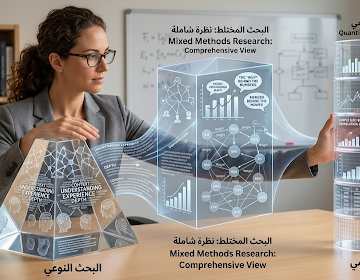
A master's thesis requires the application of a rigorous scientific methodology, from the formulation of the research issue, questions, and hypotheses, to the selection of an appropriate research design (quantitative, qualitative, mixed methods), the identification of data collection tools, to data analysis and interpretation of the results. The methodology must be clear, applicable, and scientifically justified. This includes:
•Search issue: What is the issue the research is trying to solve? It should be specific, measurable, and relevant.
•Research questions and hypotheses: What questions does the research seek to answer, and what are the initial expectations of the results?
•Research design: Is the research quantitative (relying on numbers and statistics), qualitative (relying on deep understanding of phenomena), or mixed (combining the two)? The choice of design must be justified.
•Data collection tools: How will the information be obtained (questionnaires, interviews, experiments, content analysis, case studies)? The tools must be reliable and honest.
•Study population and sample: Who are the individuals or organizations to be included in the study and how will they be selected?
•Search procedure: The detailed steps that the researcher will follow to carry out his study.
3. Accurate documentation and scientific honesty: The pillar of credibility
The researcher must accurately document all sources and references used, using approved documentation systems such as APA, MLA, Chicago, or others according to the university's specialization. Proper documentation is not just a formality; it is evidence of the researcher's erudition and respect for the intellectual property of others, and protects him or her from the charge of plagiarism. Documentation should include direct and indirect quotations, and ideas inspired by other sources. Using reference management software such as EndNote or Zotero can greatly facilitate this process.
4. Academic language and proofreading: Clarity of thought and beauty of style
Language quality is a crucial factor in the acceptance of a master's thesis. The thesis must be written in a clear, concise language, completely free of spelling, grammatical, and morphological errors. Many scientifically excellent theses are rejected or require re-editing due to poor grammar, which affects the understanding of the content and diminishes its scientific value. It is highly recommended to use a specialized proofreader to ensure that the thesis is free of any linguistic errors, paying attention to the use of accurate and appropriate scientific terminology.
5. The formatting and art direction of the message: First impressions last
Universities set specific guidelines for formatting master's theses, including font size, typeface, margins, pagination, tables, figures, and the table of contents. Adhering to these guidelines reflects the researcher's professionalism and attention to detail, and makes the thesis easy to read and navigate. The formatting should be uniform and consistent throughout the thesis, from the cover to the reference list. Advanced word processing programs such as Microsoft Word or LaTeX are preferred to ensure professional formatting.
Criterion | Importance | Additional notes |
Originality and innovation | very high | Make sure not to duplicate previous topics, and look for real research gaps. |
Scientific methodology | Basic | It is the backbone of any scientific research and ensures the validity and reliability of the results. |
Authenticity and honesty | Necessary | It protects the researcher from the charge of plagiarism and enhances the credibility of the work. |
Language and proofreading | decisive | It reflects the professionalism and seriousness of the researcher and makes it easier to understand the content. |
Formatting and output | Mission | It makes a good first impression and makes the letter comfortable to read. |
How to write a successful master's thesis: From Idea to Discussion
Writing a master's thesis requires an organized and thoughtful journey, starting from the crystallization of the idea and ending with the defense of the thesis in front of the scientific committee. Here are the detailed steps we follow in Science Club Academy to ensure your message comes across in the best light:
The first stage: Careful planning and preparation
1.Choosing a topic and crafting a title: The title should be accurate, expressive, concise, and reflect the essence of the research. It is advisable to choose a topic that excites the researcher's passion and corresponds to his/her research interests and academic specialization. Consulting the academic supervisor at this stage is vital.
2.Prepare a research proposal: This is the document that is submitted to the university for initial approval. It should contain the research question, objectives, significance, research limitations, research terminology, preliminary theoretical framework, proposed methodology, and the expected timeline for completion of the dissertation. The proposal must be convincing and well thought out.
Second stage: Building the theoretical framework and previous studies
At this stage, the researcher reviews previous literature and studies that have addressed his/her topic. The goal is to build a strong knowledge base that justifies the current research and demonstrates what it will add to scientific research. This includes:
•Collecting scientific material: Search international and local academic databases, university libraries, and specialized websites to collect books, articles, dissertations, and reports related to the topic. The researcher must be able to assess the credibility of the sources and choose the most appropriate ones.
•Writing the theoretical framework: Review key theories and concepts related to the research topic, and relate them to each other in a logical and sequential manner.
•Analyze previous studies: Review, analyze, and critique previous relevant studies, highlighting the similarities and differences between them and the current study, and identifying the research gap that the dissertation will fill.

The third stage: Designing the methodology and conducting the field study (if applicable)
This is where the researcher moves from theory to practice. Data is collected from the target sample and then analyzed using statistical software or qualitative analysis. This stage requires high accuracy and adherence to the ethical standards of the research:
•Methodology design: Detail the methodology the researcher will follow, including the study population and sample, data collection tools (questionnaires, interviews, observations, tests), and procedures for applying them. The methodology must be appropriate to the research objectives and questions.
•Data collection: Executing the data collection plan accurately, taking into account ethical aspects such as obtaining the necessary consents from participants, and ensuring confidentiality and privacy of information.
•Analyze data and interpret results: After collecting the data, the researcher analyzes it using appropriate statistical methods (in quantitative studies) or qualitative analysis (in qualitative studies). The results are then interpreted and discussed in light of the theoretical framework and previous studies, answering the research questions and testing the hypotheses. The interpretation must be logical and supported by evidence.
Fourth stage: Final drafting and thorough review
After reaching the results, the final chapter containing conclusions and recommendations is written. This is followed by proofreading and formatting according to the university's own manual. This stage is crucial to ensure the quality of the thesis:
•Write recommendations and suggestions: Based on his findings, the researcher presents a set of practical and scientific recommendations, as well as proposals for future studies that can be based on the results of his dissertation.
•Proofreading and formatting: This step is crucial to ensure the quality of the thesis. The researcher should review the thesis several times to ensure that it is free of scientific and linguistic errors, and that it adheres to the required formatting standards. It is preferable to use a proofreader and a reviewer specialized in formatting.
•Prepare for discussion: Once the dissertation has been written and proofread, the researcher must prepare well for the defense in front of the scientific committee. This includes summarizing the thesis, preparing an effective presentation, practicing answering potential questions with confidence and clarity, and defending the results and methodology.
Common challenges in master's thesis writing and how to overcome them
Many master's students in Saudi Arabia and the UAE face various challenges while writing their dissertations. Recognizing these challenges and how to deal with them can ease the process and ensure success.
1. Difficulty choosing a topic: Searching for authenticity
Some students may find it difficult to choose an original and appropriate topic. To overcome this, it is advisable to read the scientific literature, consult supervisors and experienced professors, and attend scientific conferences and seminars to learn about the latest research trends and knowledge gaps. You can also search university thesis databases to see what topics have already been addressed and avoid repetition.
2. Time constraints and task management: The art of planning
A master's thesis requires a lot of time and effort, and students may find it difficult to juggle studies, work, and personal life. Time constraints can be overcome by making a detailed and realistic time plan, setting achievable goals for each stage of the research, sticking to the schedule, and avoiding procrastination. Using project management tools and organizational applications can be very helpful.
3. Lack of references and sources: Expanding research horizons
Sometimes, a researcher may have difficulty finding enough references for their topic, especially if the topic is new or very specialized. This issue can be solved by expanding the scope of the search to include global databases (such as Scopus, Web of Science, Google Scholar), communicating with researchers who specialize in the field, and taking advantage of digital library services and university subscriptions that provide access to thousands of scientific journals and books.
4. Difficulties in statistical analysis: Use of experts
Statistical analysis requires specialized skills and in-depth knowledge of statistical software. If a researcher lacks these skills, they can attend specialized training workshops in statistics, hire specialists in biostatistics or sociology, or use available statistical analysis software (e.g. SPSS, R, Stata) after receiving the necessary training. It is important to understand the basic principles of statistics to properly interpret the results.
5. Plagiarism: Academic honesty
Plagiarism is a serious academic offense that can lead to the revocation of a degree. To avoid it, the researcher must adhere to scientific honesty, accurately document all sources, paraphrase ideas in their own style, and use quotation marks when quoting directly. It is also advisable to use plagiarism detection programs (such as Turnitin) to ensure that your work is original and free of any unacceptable plagiarism.

The Scientific Club Academy's role in supporting master's students: Your partner towards success
The Scientific Club Academy recognizes the challenges faced by graduate students and offers a comprehensive range of services to support them in their academic journey. We at Science Club Academy We are proud to be the premier partner for graduate students in the Arab world. Our services are tailored to meet all your needs and ensure excellence at every step:
1.Assist in selecting a topic and drafting a research plan: The academy's experts provide specialized consultations to help students choose innovative and relevant topics, and formulate strong and compelling research plans that ensure departmental and faculty approval.
2.Support in collecting and documenting scientific material: The academy provides guidance on how to effectively search for reliable sources in global databases and helps document them according to approved academic standards (APA, MLA, Chicago).
3.Thorough proofreading and editing: The Academy's team includes proofreaders specialized in Arabic and English, to ensure that the thesis is free of grammatical, syntactic, and spelling errors, and to optimize the academic wording.
4.Assist in statistical analysis and interpretation of results: The Academy's statisticians provide support in analyzing data using the latest statistical software (e.g. SPSS, AMOS, SmartPLS) and interpreting the results in a scientifically accurate manner.
5.Professional art direction and coordination: The Academy ensures that the thesis is professionally formatted and attractive, and meets all the formal requirements of the universities (be it King Saud University, UAE University, Qatar University, or other prestigious universities).
6.Willingness to discuss and defend the thesis: The Academy provides intensive training for students on how to confidently and effectively present their dissertations to panels, practicing answering potential questions and defending results and methodology.
For more information and inquiries, you can contact the Science Club Academy on 01027550208.
Golden tips for a superior master's thesis and search engine optimization
In addition to adhering to the aforementioned standards and steps, there are some golden tips that can elevate your dissertation and make it superior, and also help with search engine optimization if you intend to publish it as part of academic or marketing content:
•Start early and don't put off today's work until tomorrow: Don't wait until the last minute. Start working on your dissertation immediately after the research plan is approved. Planning ahead reduces stress and ensures quality work.
•Communicate regularly and effectively with your academic advisor: Your supervisor is your first guide and mentor. Maintain constant communication with him/her and ask for feedback and guidance regularly. Listen carefully to their advice and take it into consideration.
•Be organized in every detail of your work: Use time and project management tools to track your progress, organize your files, and prioritize your tasks. Organizing references and notes makes it easier to write and revise.
•Read carefully and write clearly and concisely: Extensive and in-depth reading helps you build a strong background of knowledge, and clear and precise writing ensures that your ideas are properly understood by the reader and the panel.
•Ask for help when needed and don't hesitate: Don't hesitate to ask for help from your colleagues, professors, or specialists if you have difficulty with any aspect of the dissertation. Utilizing experts saves time and effort and ensures quality.
•Maintain your mental and physical health: The master's journey can be stressful and demanding. Make sure to take regular breaks, exercise, maintain a healthy diet, and get enough sleep. Good health is the foundation of productivity.
•Focus on keywords (SEO): If the article will be published online, use keywords related to your topic (such as “master thesis writing in Saudi Arabia”, “master thesis help UAE”, “scientific club academy”) naturally and logically in the titles and texts to increase the chances of appearing in search engines.
•Build internal and external connections: Linking the article to credible sources inside or outside of your site boosts its value to search engines.
•Constantly updating content: Keep up with the latest laws and regulations governing postgraduate studies in your country, and update your article regularly to stay relevant and authoritative.
Conclusion: The key to a successful master's thesis
Writing a master's thesis is a big challenge, but it's a challenge worth taking because of the positive impact it can have on your academic and professional career. By adhering to scientific standards, following the methodological steps, and taking advantage of the support available from specialized entities such as Science Club AcademyGraduate students in Saudi Arabia and the UAE can achieve successful and acceptable master's theses, opening new horizons in their academic and professional careers. Always remember that perseverance, organization, scientific honesty, and a constant search for knowledge are your keys to achieving excellence in this field.
Science Club Academy: Your partner towards academic excellence.
Contact us now and start your journey to success:
Phone/Whatsapp: 01027550208
Note: All images included in this article were created specifically for professional academic content and are labeled with our contact number to ensure easy access to our services.
References and suggested reading material:
1.Thesis writing guides in Saudi universities (King Saud University, Umm Al-Qura University, Imam Muhammad bin Saud Islamic University).
2.Academic Accreditation Standards for Graduate Programs in the United Arab Emirates (Ministry of Education).
3.Scientific Research Methods: Foundations and Applications - authored by a group of specialized Arab academics.
4.APA Manual 7th Edition and MLA Handbook.
5.Studies on the importance of scientific research in realizing the Saudi Vision 2030 and the UAE Innovation Strategy.



No comment