


Preparing a doctoral research plan from title selection to final acceptance
Preparing a PhD research proposal is the bridge that takes you from an ambitious idea to a complete academic project that impresses defense committees and puts you on the path to scientific excellence. This stage is not just about collecting references or writing objectives; it is a careful design process that requires precision in drawing the roadmap for your future research. With a solid methodology and sharp analytical vision, you can turn research challenges into real opportunities for creativity, giving you a strong, confident, and professional start at reputable universities.
Preparing a doctoral research plan
The process of preparing a doctoral research plan is the cornerstone of your academic future, as it is a roadmap that reflects the depth of your research vision and your ability to innovate. Science Club Academy You have a group of experts to accompany you at this crucial stage, by integrating the sober methodology with the latest analysis tools to formulate a research project that meets the most accurate international standards, so hurry up and invest in your success and join the ambitious Science Club Academy community to make your thesis a scientific reference.

What are the steps to prepare a complete doctoral research plan
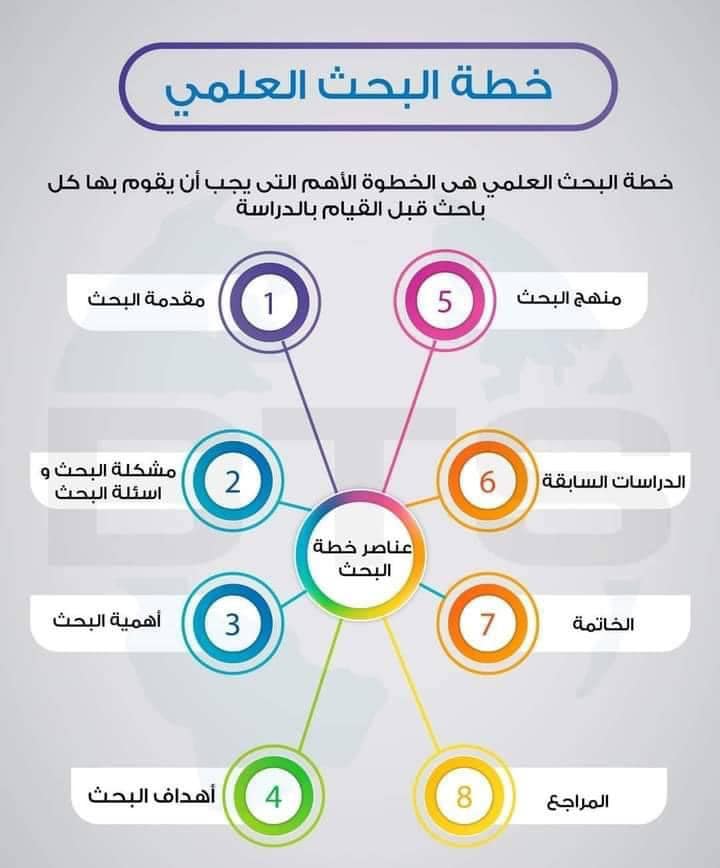
You can prepare a doctoral research plan by following a set of steps that consist of the following:
Writing the introduction
Therefore, you should start with a general preface that moves intelligently and logically to the core of the topic, while showing the knowledge gap and the reasons why you chose this particular research, supported by recent statistics and an accurate chronology that shows the importance of your study and your future scientific aspirations.
Objectives of the letter
They represent the final goals and results that you seek to achieve at the end of your journey, as they must be formulated in specific terms and arranged from major to minor goals, while clarifying the practical mechanisms followed to transform these theoretical ambitions into tangible realities that serve the scientific specialization.
Search issue
It is considered the core around which the entire work revolves and is represented in crystallizing the research issue and formulating its dimensions and causes through precise and pivotal questions, which the researcher works to deconstruct and answer with a critical methodology in order to provide innovative and unprecedented scientific solutions.
Theoretical framework and previous studies
This framework is considered the depth of knowledge that proves the sobriety of your research and the strength of your knowledge, where previous literature is analyzed and critiqued from reliable sources, while clarifying the points of agreement and difference between it and your current study to determine the real scientific addition that your thesis will provide to the academic library.
Research hypotheses
They are intelligent and logical expectations based on scientific foundations to face the research issue, as they are formulated to be testable and field verifiable, and their importance lies in focusing the researcher's efforts on collecting and analyzing data accurately, which prevents deviation from the objective path of the thesis.
Scientific methodology
It is the procedural engine and the technical path that ensures the accuracy and integrity of the final results, whether you adopt a quantitative approach based on the language of numbers and statistics or a qualitative approach that analyzes texts and deep contexts, in a way that suits the nature and objectives of your research.
Terms used in the research
To ensure academic rigor and prevent overlap in concepts, key terms must be defined with procedural precision that prevents any misinterpretation, making it easier for the reader to understand the specialized content and clarify the deep connections between the variables and scientific concepts used in the study.
References used
The documentation of all original sources and academic books gives your research its official status and legal force, and allows the reader to trace the path of the information and ensure that the thesis is free of any documentary or scientific errors.
Also read about:How to Become a Professional Statistical Researcher and Improve Your Research's Chances of Acceptance Worldwide? Your Complete Guide for 2026
How to choose a research topic carefully
You can choose your research topic carefully by considering the following criteria:
- The topic must be characterized by novelty and avoid repetition, while providing a research treatment and results that add real value to the scientific community.
- The title should be related to the researcher's field of study and his/her direct academic specialization, in order to be in-depth and focused without being distracted by other disciplines.
- The topic needs to be researchable, measurable, and have clear objectives that can be achieved, taking into account its suitability to cultural, economic, and political conditions.
- Choosing issues related to the environment and the local community so that the findings can be generalized and implemented on the ground.
- It must be ensured in advance to provide modern and diverse scientific sources and materials that serve the research and enrich its knowledge content sufficiently.
- The scope of the research needs to be commensurate with the researcher's available time and material capabilities.
Reference and referencing service
The scientific club academy excels in providing professional support that goes beyond mere organization, as our team works to revise your references according to the latest international systems. The scientific club academy excels in providing professional support that goes beyond mere organization, as our team works to revise your references according to the latest international systems.
The academy also provides recent and varied sources that enrich your research and earn the confidence of academic committees. Don't hesitate to use our services to give your dissertation the accuracy and excellence it deserves.
How to Professionally Formulate Research Questions
Preparing and structuring a doctoral research plan is a meticulous process that starts with formulating research questions, and you can do it professionally with the following:
- Questions should stem from the research question and serve the research's primary goals and objectives very clearly.
- Clarity and focus by formulating specific and non-interpretable questions, while avoiding generality that may distract from the study.
- Ensure that the questions can be answered through research tools and field or theoretical data.
- Questions need to be arranged from general to specific to ensure that all aspects of the research issue are covered in depth.
Science Club Academy offers comprehensive support in formulating your research questions according to international academic standards that improve the chances of your proposal being accepted and your dissertation standing out.
Continue frothing:What will you learn in a teacher preparation course?
How to design a research methodology step by step
The process of preparing a doctoral research plan depends on the design of a precise scientific methodology, as its steps are summarized as follows:
- Choose the appropriate course of study, whether descriptive, analytical, or experimental, to suit your goals.
- The research population must be accurately defined and a representative sample must be selected that clearly reflects the academic reality.
- Scientific methods of data collection, such as interviews or questionnaires, need to be designed to ensure the accuracy of the information.
- Appropriate digital methods must be identified to process the data and extract reliable and final results.
Provides you with Science Club Academy A professional systematic design that increases the scientific value of your thesis.
Try the Free Statistical Lab
If your research is based on a questionnaire, you can test its reliability (Cronbach's alpha) and get descriptive statistics for its variables for free before the full analysis, with explanations in Arabic and English.
Frequently Asked Questions
How long does it take to prepare a doctoral research plan?
This usually ranges from one to three months, depending on the rigor of the topic and the availability of sources.
Can the plan be modified after it has been submitted to the committee?
Yes, adjustments are sometimes required as directed by the moderator or the seminar committee.
What is the most important element of a successful research plan?
Clearly articulate the research question with achievable goals and a solid methodology.
The preparation of a distinguished doctoral research plan is the real guarantee of a successful academic journey that ends with obtaining the prestigious scientific degree with all its merit, and the Science Club Academy, we shorten the distances for you and put our expertise in your hands to formulate an integrated research project that impresses the committees, so hurry up and contact us now to start your own success story.






No comment